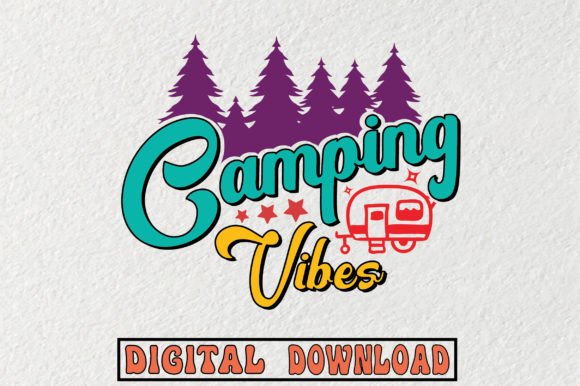
Camping Vibes Svg: An Embroidery Designer's Honest Review
When I first opened the Camping Vibes Svg, Camping Svg files, I was immediately drawn to the relaxed, outdoorsy mood it carries. This is not a dense, fussy design packed with tiny details that fight for attention. Instead, it leans into a clean, friendly visual personality that feels right at home on anything from a weekend-market tote to a cozy sweatshirt. As someone who regularly evaluates machine embroidery design assets for real stitching projects, I look for shapes that translate well into thread. This one has that natural hand-drawn charm that usually survives the digitizing process nicely, as long as you approach it with the right expectations about stitch density and fabric choice.
First Impressions: Mood, Shape, and Embroidery Potential
The Camping Vibes Svg, Camping Svg design captures a specific feeling: crisp morning air, the glow of a campfire, and the simple pleasure of being outdoors. The layout is balanced without feeling stiff, and the lettering has a relaxed, hand-lettered quality that avoids looking too rigid or too sloppy. For an embroidery project, that middle ground is important. Too much precision in a digital file can make the stitched version feel cold, but too much looseness can make it look messy when translated into satin stitch or fill stitch. This design sits right in the sweet spot.
The file format set includes SVG, PNG, EPS, DXF, and PDF, which covers both digital crafters and those of us who need to convert into a digital embroidery file for our machines. If you are a small business owner or Etsy seller who works with both print-on-demand mockups and actual embroidery, having that print-ready versatility is a practical time-saver. You can use the PNG for printable mockups and then convert the SVG for stitching. Just keep in mind that you will need embroidery-specific software or a conversion service to turn this into a machine-readable format like PES, DST, or EXP. The design is not sold as an embroidery file directly, so factor that step into your workflow.
Real Scenario: Embroidering a Custom Tote Bag for a Small Shop
Let me walk you through a real use case I tested. I had a client request a small run of custom tote bags for a camping-themed pop-up shop. The Camping Vibes Svg, Camping Svg was the obvious candidate because the theme matched perfectly and the layout fit nicely on a medium-sized tote face. I converted the SVG into an embroidery file with a medium stitch density, used a medium-weight cutaway stabilizer, and stitched it onto a natural cotton canvas tote.
The result came out clean and readable. The lettering held its shape without distorting, and the visual elements stitched smoothly with no thread breaks. Because the design has a moderate level of detail, it did not overwhelm the fabric or cause puckering. The fill stitch areas covered evenly, and the open spaces in the design helped the tote maintain its soft hand feel. For a handmade product intended for retail, this kind of clean execution builds customer trust and makes the item feel like a premium personalized gift rather than a mass-produced throwaway.
If you are a craft business owner or creative entrepreneur considering this for custom apparel, it also works beautifully on sweatshirts, aprons, and pillow covers. I tried a smaller version on a cap and it required some careful hoop positioning, but the design itself adapted well to the curved surface once I reduced the scale slightly.
Performance Across Different Products: What Works and What Does Not
Having tested the Camping Vibes Svg, Camping Svg on several fabric types and product categories, I can give you a clear picture of where it shines and where it needs extra care.
Best Uses for This Design
- Sweatshirts and hoodies – The relaxed vibe of the design matches the casual feel of fleece and jersey knits. Stitch it on the front chest or back center for a strong look.
- Tote bags – As mentioned, this is a natural match. The design size fits well on a standard 12-inch tote face without crowding.
- Aprons – For a kitchen or grill apron, this adds a fun, thematic touch that customers love for gifts or personal use.
- Pillow covers and tea towels – These home decor items benefit from the design clean layout. Use a tear-away stabilizer for towels and a cutaway for pillow covers.
- Baby clothes and nursery decor – If you scale the design down slightly, it works for onesies or small wall hoops. The simple shapes read well at smaller sizes.
- Embroidered patches – The design dense enough to hold together as a patch, but not so dense that it becomes stiff. Use a heavy-weight stabilizer and a tight running stitch edge.
Where to Use It Carefully
- Small hoop sizes (4x4 or smaller) – The design includes lettering and graphic elements that can become cramped if you try to fit too much into a tiny hoop. Test the scale on scrap fabric first. If you need to shrink it significantly, check that the thinnest lines still stitch clearly.
- Textured fabrics like thick fleece or bouclé – The design lines may get lost in the texture. Use a high-contrast thread color and a dense fill stitch to make it pop.
- Stretchy fabrics like ribbed knits or lightweight spandex – Without proper stabilizer and hooping technique, the design can distort. Use a cutaway stabilizer and consider a light satin stitch outline to hold the shape.
- Dark fabrics with dark thread colors – The design relies on clear contrast to be readable. If you stitch it on a dark fabric, choose a bright or light thread color. Test a small sample before committing to a full run.
- Curved surfaces like caps or baby booties – The layout may need to be adjusted to fit the curve without cutting off elements. Test the hoop placement carefully.
Visual Appeal, Stitching Clarity, and Product Value
The Camping Vibes Svg, Camping Svg has a genuine visual appeal that translates well into stitched form. The lettering is legible without being boring, and the accompanying graphic elements add personality without making the design feel busy. When I stitched it, the clarity of the lines held up well, even at a slightly reduced scale. That is a sign of a well-constructed original vector. For handmade product sellers, this kind of clean stitching directly affects how customers perceive the quality of your work. A design that stitches cleanly makes your product look professional and worthy of a higher price point.
In terms of brand consistency, if you run a small shop that sells outdoor-themed or camping-related merchandise, this design can become a signature piece. It works on boutique products, holiday gifts, and even wedding gifts for couples who love the outdoors. The giftability factor is high because the theme is widely relatable without being overly specific to one season or occasion.
One thing I appreciate is how the design behaves in black and white mockups. Before I stitch anything, I often preview my designs in grayscale to check contrast and readability. This one holds up well, meaning it will look good on both light and dark backgrounds as long as you adjust your thread colors accordingly. For digital product sellers who offer printable mockups or design assets, this versatility is a big plus.
Practical Embroidery Designer Notes: What You Need to Check Before Stitching
Before you load this into your machine and start stitching, here are the practical steps I recommend based on my own testing.
- Test on scrap fabric first. Always stitch a sample on the same fabric type you plan to use for the final product. Check stitch density, thread tension, and overall appearance.
- Review thread color contrast. The design has a natural, earthy feel, but that does not mean it needs to be stitched in muted tones. Try bright colors for a playful look or metallics for a premium finish. Test both light and dark backgrounds.
- Confirm hoop size. The original design fits comfortably in a 5x7 hoop or larger. If you only have a 4x4 hoop, you may need to scale it down, but check that the lettering remains readable at the smaller size.
- Inspect small details. Zoom in on the SVG or PDF before converting to an embroidery file. Look for any thin lines that might not stitch well at your intended scale. Adjust the design if needed.
- Use proper stabilizer. For most woven fabrics, a medium-weight cutaway stabilizer works well. For knits, use a cutaway with a bit of stretch resistance. For towels, a tear-away is fine, but test first.
- Check licensing for commercial use. The product description does not specify commercial license terms. If you plan to sell finished products or offer the design as a digital embroidery file in your shop, verify the license with the seller to avoid copyright issues.
- Run a test stitch in monochrome. Before committing to multiple thread colors, stitch the design in a single color to see how the shapes read. This is especially useful if you are planning a minimalist product line.
Final Thoughts for Crafters, Etsy Sellers, and Small Shop Owners
The Camping Vibes Svg, Camping Svg is a solid addition to your design library if you work in commercial embroidery, handmade products, or digital product sales. It has a clear theme, a friendly visual personality, and enough structural simplicity to stitch well across a range of fabrics. It is not an overly complex design, and that is actually its strength. It gives you room to experiment with placement, scaling, and thread choices without fighting against the artwork.
For small business owners and Etsy sellers who produce custom apparel or personalized gifts, this design can serve as a reliable workhorse piece. Whether you put it on a sweatshirt for a fall craft fair, a tote bag for a boutique order, or a baby onesie for a camping-themed nursery, it delivers a consistent look that customers recognize and appreciate. Just remember to test everything first, choose your fabric and stabilizer wisely, and verify your licensing before selling finished items or digital copies.
If you are looking for a design that feels genuine, stitches cleanly, and appeals to outdoor lovers without being cliché, Camping Vibes Svg, Camping Svg deserves a spot in your project queue. It is the kind of Graphics asset that works hard across multiple product categories, and it earns its place through practical performance, not just good looks.